


Since Elon Musk took over Twitter, user engagement with the app has changed significantly.
While some people appreciate the recent updates, such as the introduction of its own AI named Grok and the option for premium features, others are exploring new platforms for a more traditional microblogging experience.
Bluesky is becoming a popular option for people who miss the old Twitter.
But which platform is better?
To compare Bluesky vs Twitter / X, we need to look at different views on each platform.
Before continue: Meet the Top Tool to Grow Your X Presence.
Start 15 Day Free Trial
Get daily AI-powered recommendations on who to follow, what to tweet, and which conversations to join. You act, Owlead guides. Less than 1 minute to set up.
Start Your Free Trial →What is Bluesky?
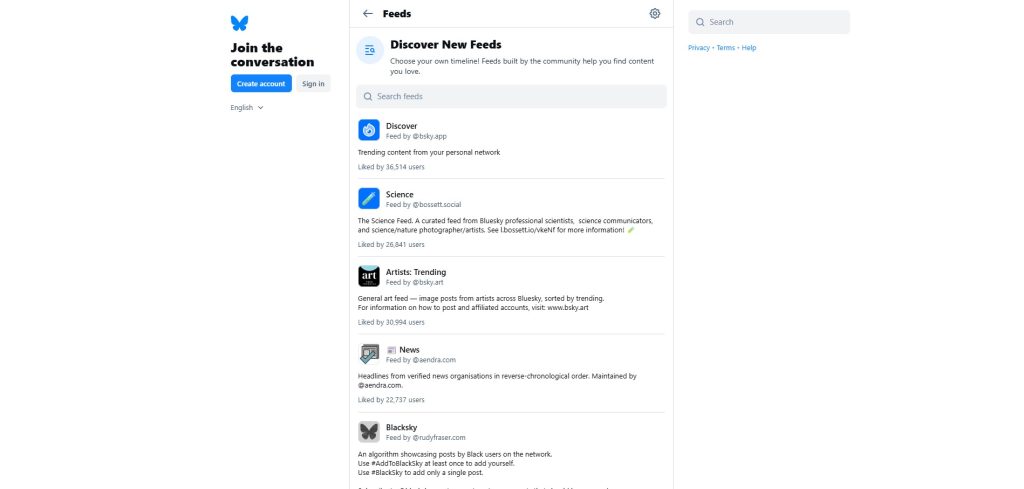
Bluesky is a social network that gives users control over their data.
This means you get access to customizable algorithms that influence what shows up in your feeds, which is different from the algorithms used by X.
Actually, Bluesky started as a project within X but is now an independent platform. Jack Dorsey, a co-founder and former CEO of Twitter, founded it.
This background is reflected in its design, which resembles Twitter in several ways:
- Users create profiles complete with usernames or handles.
- You can follow others, and they can follow you back.
- Most posts can be replied to, reposted, or shared with a personal comment.
- Direct messaging between users is also available.
In essence, Bluesky vs Twitter are not so different; just like Threads, Bluesky has its own features.
Bluesky vs Twitter: What do they have in common?
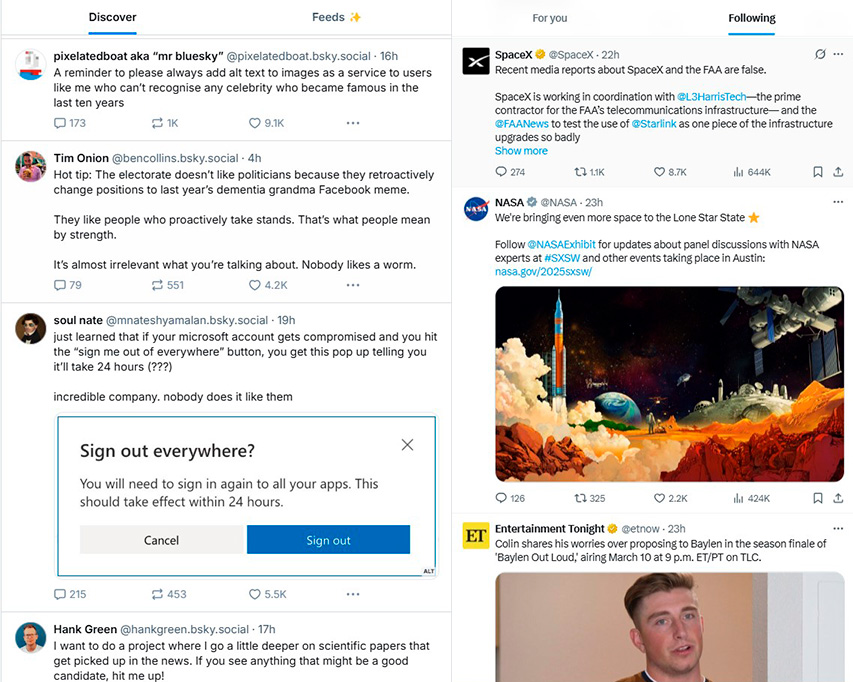
Bluesky aims to create “an open foundation for the social internet.”
Even though Bluesky and Twitter have their own unique qualities, they both have some common features that make them great platforms for brands:
- Both Bluesky and X emphasize short-form content, allowing users to quickly share concise updates, thoughts, images, and links.
- Real-time interaction is another big plus for both platforms, making them great for customer service, live updates, and discussions on trending topics.
- Post can include text, an image, a meme, a video, and even a GIF.
- Hashtags are essential for categorizing content and joining larger conversations on both Bluesky and X.
- With character limits—X has 280 characters (unless you’re verified) and Bluesky has 300—both platforms push brands to create impactful messages that grab attention quickly.
If you’re looking to create content for a specific niche, both options have what you need to promote your account effectively.
Bluesky vs Twitter: What are the key differences?
Bluesky and Twitter / X may appear quite similar at first glance, but they have some essential differences.
Twitter offers many features, such as Spaces and Lists, while Bluesky aims to create a unique social experience.
This affects how users interact on both platforms and creates different opportunities for brands.
1. Bluesky focus on decentralization
The most important difference between Bluesky vs Twitter is decentralization.
Bluesky is a decentralized social network that uses the AT Protocol.
This protocol gives users more control over their data and how they interact with others.
Here’s how it works on Bluesky:
- Users can pick or create their own servers, called “instances,” with their own rules and communities.
- They get to choose algorithms that show them content they actually want to see instead of having to deal with a one-size-fits-all algorithm like on X.
- Plus, Bluesky lets users verify their accounts with their own custom domains without needing the platform’s stamp of approval.
On the flip side, X is a centralized platform where the company has all the control over user data and how content gets moderated.
This means brands have limited input on moderation but can use tools like promoted posts to reach a large audience.
2. Monetization and advertising between Bluesky vs Twitter
Bluesky doesn’t have any tools for making money or ads, which means it’s completely ad-free.
While this might not be great for jumping into paid campaigns right away, it fosters a more organic environment where brands can prioritize building authentic connections.
In contrast, Twitter provides a range of comprehensive monetization tools, such as paid subscriptions and ad campaigns.
Its advanced targeting features enable brands to effectively and accurately reach specific demographics.
Overall, Twitter definitely has the edge for businesses and content creators, especially in niche areas like crypto Twitter and OnlyFans.
3. You can’t schedule posts on Bluesky right now.
Bluesky currently lacks a native option for scheduling posts, while X Premium users can schedule tweets in advance for flexibility.
This means people using Bluesky have to post on the fly, making it tough for content creators and businesses to keep up regular engagement compared to platforms like X that have those handy scheduling tools.
4. Verification and analytics are very different when it comes to Bluesky vs Twitter
Bluesky verifies users differently than traditional platforms like X.
Instead of using standard verification badges, Bluesky lets users prove their identity by linking a custom domain they own (e.g., username.com) to their profile.
To make this work, you have to prove you actually own the domain, usually by adding a verification record in the domain settings or doing a DNS check.
On the downside, Bluesky doesn’t offer any analytics tools to see how your posts are doing or to interact with followers.
So, you won’t know how well your content is landing.
In contrast, X offers strong analytics features, giving brands detailed insights into how their posts perform, who their audience is, and how much they engage.
This info helps users figure out what content works best and increase their reach.
Plus, X’s updated verification system gives users another way to build trust.
5. Content Moderation
When it comes to content moderation, Bluesky vs Twitter operate quite differently.
Bluesky empowers users to manage their own content moderation through customizable filters and algorithms, fostering a more personalized and less toxic online environment.
In contrast, Twitter’s centralized moderation policies have drawn criticism, particularly regarding inconsistencies under new management.
6. Bluesky and hashtag customization
Hashtags, traditionally linked with X, have made their way to Bluesky, but they come with an interesting twist.
When users click or tap on a hashtag, they can see all related posts, look at only their own posts, or mute the hashtag if they want to avoid that topic.
On X, you can’t mute specific hashtags, but you can mute individual words or entire accounts.
7. Monetization tools for creators
X offers great tools to help content creators make money.
Features like X Pro and revenue-sharing options allow creators to earn by providing subscriptions, receiving tips, or sharing in advertising revenue.
Unfortunately, Bluesky does not have any built-in tools for monetization.
This means content creators wanting to earn money will need to find other platforms or services to reach their audience outside of Bluesky.
8. Other differences between Bluesky vs Twitter
At first glance, Bluesky appears quite similar to Twitter, but there are other minor differences:
- Bluesky is open and decentralized, while X is controlled by one corporation.
- Bluesky allows third-party apps and services, giving users more flexibility. Bluesky has a smaller user base than Twitter.
- You can’t create polls on Bluesky.
- Bluesky has more options to customize your interactions with posts.
- Bluesky has an open API.
Conclusion
Many people compare Bluesky vs Twitter, especially those who enjoy reading posts with their morning coffee.
If you’re not happy with Twitter and its recent changes, consider trying Bluesky.
As you can see, it has many features that are similar to Twitter.
However, if you run a business or use Twitter for marketing, Bluesky may not be the best fit yet because it doesn’t have some key features.
Still, establishing a presence on Bluesky could be a good idea for the future!